

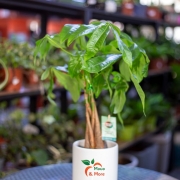
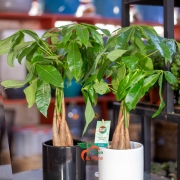
Pachira Aquatica also known as Money tree or Malabar chestnut or Saba nut.
How to take care of a Money tree
Many houseplants grow quite slowly or stay small. This isn’t for everyone, because some of you love big and bold plants!
Bigger plants are great statements in any room and will add some texture to your walls or furniture.
If you’ve been considering adding a houseplant to your home THAT makes a statement with fast and bold growth, the Money tree (Pachira Aquatica) is a great option.
According to feng shui, the Pachira money tree is said to bring good luck and good fortune.
Money tree plants often have their slender trunks braided together and are a low maintenance option for areas with artificial light.
The tree can attain a height of 60ft when planted direct in the ground, although they are common as small, potted ornamental specimens.
What type of soil should I use for my Money tree?
The Money tree grows best in rich, loamy soil that is well-draining. You can use most general potting soils, as these usually contain plenty of nutrients and drain quite well. You can also make your own soil mix by combining one part potting soil, one part peat moss, and one part sand with charcoal . This mixture lets oxygen through quite well, holds onto moisture, but also drains excess moisture quite quickly. This allows your Money tree to soak up all the moisture it needs, with a low chance of getting root rot
How often should I water my Money tree?
Like most tropical plants, the Money tree also enjoys slightly moist soil. You can keep your Money tree happy by watering the plant when the top inch of soil feels dry to the touch. Depending on the size of your plant and the pot it’s in, this may be once a week or once every two weeks.
Water slowly and deeply, until water starts to come out of the drainage holes at the bottom of the pot. Allow the plant to drain for a few minutes until the excess moisture has drained from the pot. Be sure to not overwater your plant as this can cause root rot.
Remember to fertilize it at least monthly for healthy growth and building resistance against pests.

Leave a Reply
Want to join the discussion?Feel free to contribute!