
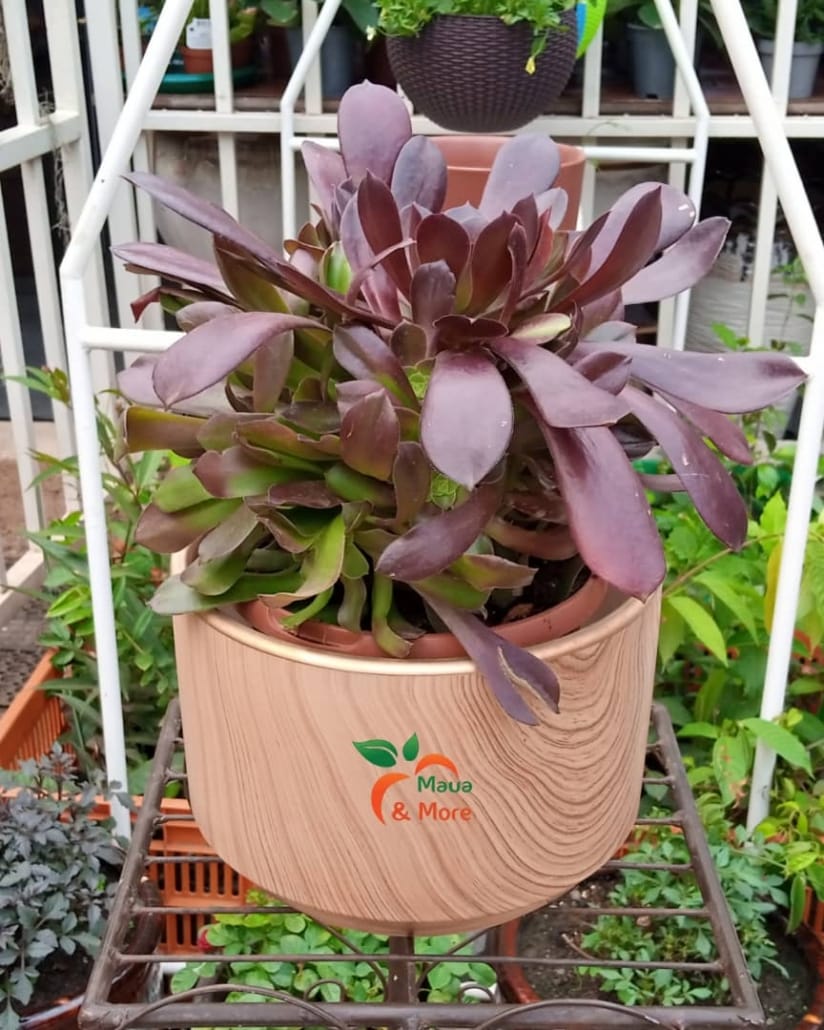
Aeonium Arboreum Plant
AEONIUM ARBOREUM PLANT
Growing an Aeonium is a genus that includes approximately 35 species of plants that belong to the Crassulaceae family, which also includes echeveria plants. These succulent plants are native to the Canary Islands, Madeira, and Morocco. Unlike most succulents, such as agave and aloe, aeoniums are not drought resistant, due to their shallow root systems. Aeoniums are generally monocarpic, which means they perish after flowering.
In warmer climates, aeoniums can be grown as in the ground as perennials, but it is also common to grow them as potted plants on decks or patios. In colder regions, they should be grown in containers and taken inside before frost. When grown in the garden, aeoniums command the most attention when grouped in masses. Tall varieties can look like bonsai when they get shrubby; you can trim them if they get too leggy. The cuttings will readily root and make new plants, helping you fill out your planting area.
Aeoniums have shallow root systems since they store their water in their leaves and stems. Unlike other succulents, which prefer dry soil, aeoniums prefer soil that is moist but not wet. They can produce roots along their stems, which you may notice if the plant gets pot bound or the stems fall and touch the soil. Make sure these roots do not dry out. The stem roots will quickly turn the fallen pieces into new plants. Leggy branches do tend to fall over and snap off from the weight of the rosettes. If this happens, you can replant the broken stem.
GROWING AND CARING FOR AEONIUM ARBOREUM PLANT
If planted in the proper environment, aeoniums require very little maintenance.
Light
As with most succulents, aeonium plants grow best in full sun to part shade. In hot summers and desert conditions, light shade may be necessary. Indoors, give them bright indirect light.
Soil
A sandy loam or regular potting mix amended with perlite is better than a mix specifically for succulents and cacti since aeoniums need some moisture. If grown in garden beds with dense soil, it may be necessary to amend with peat moss to improve soil porosity.
Water
In the winter, water whenever the top inch of soil has dried out. Test by poking your finger down into the soil an inch or two and water if your fingertip is dry. These plants do like more moisture than many other succulents, but too much moisture or allowing them to sit in wet soil will cause root rot.1
Temperature and Humidity
These plants prefer a Mediterranean climate—not too hot, not too cold, and not too dry. Most aeonium varieties are only hardy in USDA zones 9 to 11. Growing aeoniums in moist and shaded soil will keep them growing in high heat, but their true growth season is winter to spring, when temperatures are cool (65 to 75 degrees Fahrenheit) and damp. They may go dormant in summer and do not require excessive watering, except in very dry conditions.
Fertilizer
Feed during the growing season with a half-strength balanced fertilizer every month or so. Do not feed while dormant.
NOTE:
- Provide your outdoor aeonium with full sun to partial shade. Aeonium plants generally thrive in warm weather with lots of direct sunlight. Keep in mind that part shade might be necessary during especially hot weather conditions or if you are planting in desert conditions.
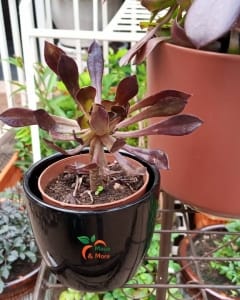
- Choose a pot with sufficient drainage. Aeonium plants thrive in containers because they need little soil. If planting in a container or pot, choose one with drainage holes, which help prevent root rot caused by standing water. (Plant to repot your aeonium plant every two to three years with fresh potting soil.)
- Use a regular potting mix. While most succulents do well when planted in cactus potting mix, aeonium plants require more moisture. Use regular potting mix and amend with perlite.
- Fertilize your plant during the growing season. In the cool months, feed your plant with a half-strength balanced fertilizer once a month. Do not fertilize your aeonium when it is dormant in the hot months.
- Give your aeonium plenty of water during the hot months. Aeonium plants require more water than most types of succulents. In the hot time, water the plant when the first two inches of the soil are dry. Do not overwater, as too much moisture will lead to root rot. During the cool season, your aeonium does not need to be watered, as it is dormant during these months.






Leave a Reply
Want to join the discussion?Feel free to contribute!