
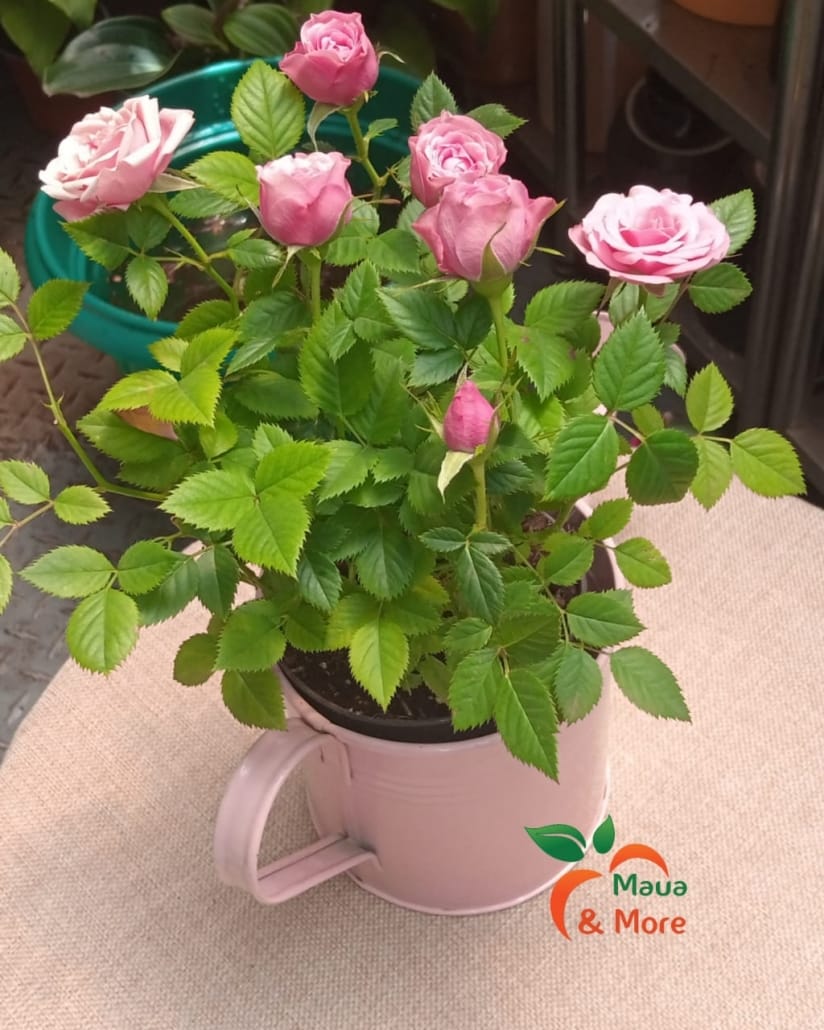
Pink Rose(Queen Elizabeth Rose)
PINK ROSE (Queen Elizabeth Rose)
Pink Rose(Queen Elizabeth Rose) was the first Grandiflora rose, which is a cross between a hybrid tea rose and a floribunda rose.
Grandiflora roses combine the long, tall, upright stems of hybrid tea roses with the multiple flower clusters of Floribunda roses.
Queen Elizabeth rose has pink flowers and dark green, glossy, almost leathery foliage.
Roses have the reputation of requiring a lot of care and being finicky to grow.
Not this one—Queen Elizabeth rose is fairly easy to grow, hardy, and disease-resistant, which makes it a popular choice especially for rose novices.
But because it is a shrub-like plant that reaches 6 feet or more in height, it requires space and is best planted towards the back of a flower bed, or as a screen.
Queen Elizabeth rose should be planted in the early to mid-fall so that the roots have time to grow and get established before the plant enters dormancy.
The meaning of pink roses is gratitude and admiration.
They’re the perfect choice for the people you appreciate most, like your friends, siblings or teachers. Pink roses can also represent femininity and elegance, which makes them perfect for events like engagement parties, proms and baby showers for a baby girl.
Types of Queen Elizabeth Rose
Besides the shrub, there is a climbing variety of Queen Elizabeth with the same dark green, robust leaves, and light pink flowers. It grows on trellises, fences, and pergolas.
Propagating Queen Elizabeth Rose
As a hybrid, Queen Elizabeth rose should not be propagated from seeds because the new plant won’t be true to the parent. But you can propagate the rose from stem cuttings:
- Using sharp pruners, take a 12-inch cutting from a stem that has recently bloomed and remove any flowers or flower buds.
- Remove all but the top two sets of leaves on the stem.
- Split the bottom ¼ inch of the stem into quarters and dip it in rooting hormone.
- Fill a 6-inch pot with potting mix for roses. Poke a hole in the potting mix and insert the stem split-side down. Gently tap down the soil around the stem
- Water it well.
- Cover the pot including the cutting with a clear plastic bag to help retain soil moisture. Place it in a warm location with bright light and keep the soil evenly moist until you see new growth, at which point you should remove the plastic bag.
Also check out the detailed instructions how to propagate roses from stem cuttings.
Potting and Repotting Queen Elizabeth Rose
Because Queen Elizabeth rose is a sizeable shrub, it is best planted in a garden bed, but you can also grow it in a large container.
Make sure the container is one-third wider than the plant and accommodates its entire root system, and that it has large drainage holes.
Adding a layer of gravel at the bottom improves the drainages and also adds weight to a plastic container so it is less prone to toppling over. Place the container in a sunny location but away from strong winds.
Keep in mind that when growing Queen Elizabeth rose as a container plant, it needs additional care in the summer (more frequent watering) as well as in the winter (insulation of the container against cold).
Pruning
Deadhead the spent flowers to encourage repeated blooming.
Before buds start to form, remove all dead and diseased wood and stems and any crossing stems. Then do a hard pruning and cut back up to one-third of the plant, which encourages growth and blooming Make sure that you sanitize your pruners with mixture of two cups of bleach and one gallon of water, so you don’t potentially spread any plant diseases around. Remove all the debris and dispose of it in the trash.
Growing and caring for Queen Elizabeth Rose
Choose a planting location that ensures Queen Elizabeth rose gets what it needs to thrive: full sun and rich, well-worked, moist soil.
Roses are notorious for a many diseases and even a variety like Queen Elizabeth rose that is considered disease-resistant is not immune. But you can thwart the spreading of diseases by ensuring good air circulation by leaving at least 3 feet between plants, and by keeping up with regular pruning. Pruning allows the foliage that is wet from morning dew and after a rain to dry fast.
Light
Queen Elizabeth rose needs at least six, better eight hours of full, direct sunlight per day.
Soil
Loamy soil is ideal. The soil should be rich, well-draining, and loose. Roses prefer slightly acidic soil with a pH between 6 and 7.
Water
The soil should be consistently moist but not wet. Poor drainage, or too much water, leads to fungal diseases.
In the absence of rain, check the soil moisture and if the top 2 to 3 inches feel dry, water the rose deeply. The roots of roses are up to 3 feet in the ground and the water needs to reach them.
Mulching around the base of your rose, ideally with wood chips or bark mulch, helps retain the soil moisture and suppresses weeds that will compete with the plant for water.
Temperature and Humidity
Queen Elizabeth rose can tolerate winters up to USDA zone 5 and hot summers up to zone 9. High humidity can be problematic, especially if there isn’t sufficient air circulation, as fungal diseases spread in humid weather, or the branches are too dense due to lack of pruning.
Fertilizer
In the early spring, as new growth starts to appear, fertilize the rose with an all-purpose fertilizer or a special rose and flower fertilizer. Fertilize again after the first bloom. A third feeding at the end of the season is only advisable in a warmer climate with a long, mild fall because new growth late in the season is vulnerable to frost.
How to Get Queen Elizabeth Rose to Bloom
One common reason why Queen Elizabeth rose does not bloom is that it does not get enough direct sunlight. If that’s the case, check the plants around it to see if you can prune them back to give the rose additional light. The other reason could be too much nitrogen because the rose has been fertilized too much or too often, which causes the plant to grow more foliage than flowers.







Leave a Reply
Want to join the discussion?Feel free to contribute!