
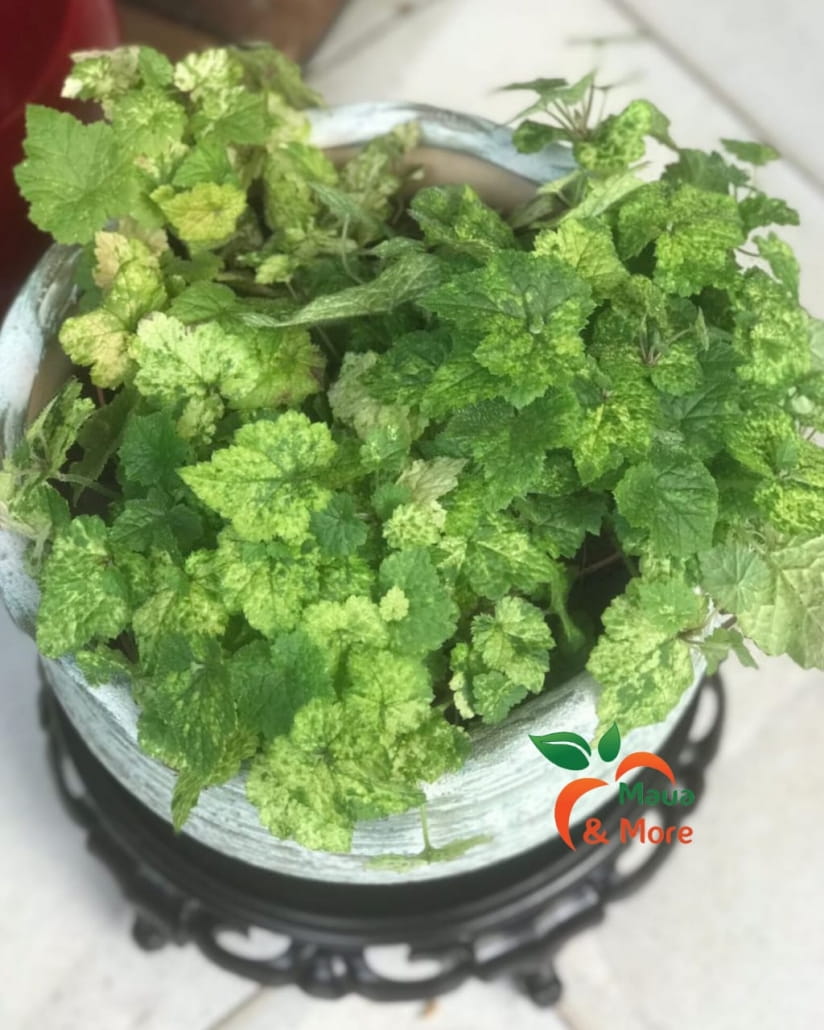
Tolmiea menziesii
TOLMIEA MENZIESII
The Tolmiea genus includes the only stable evergreen perennial species, Tolmiea menziesii.
In the cutout of the leaf, where the petiole passes into the leaf plate, new young plants develop.
This is a rhizomatous groundcover species with a height of 15-20 cm, a diameter of about 40 cm. Pubescent leaves react quite quickly to unfavorable growing conditions – they turn yellow.
At the beginning tubular light green flowers with reddish pigmentation appear on thin branched shoots 50 cm long.
Light green leaves of the variety ‘Mottled’ are covered with yellowish spots or other patterns, cream or golden in color.
This plant also commonly known as
- Curiosity plant
- Mother of Thousands
- Pick-a-back plant
- Pickaback Plant
- Piggy Back Plant
- Piggyback Plant
- Youth on Age
Piggyback Plant is a native evergreen perennial herb found on the coast of western North America. It grows as a ground cover in moist forests, wetlands and along streams to 1 foot tall. The flowers appear in loose racemes in spring with small tubular purplish-brown flowers that attract bees and butterflies. The maple leaf-shaped leaves form a dense ground cover and the mature leaves form plantlets at the base where the stem meets the leaf. These fall to the ground and root. The plant can also spread by rhizomes and seeds.
Use this plant as a ground cover in a shady moist to wet area or as a house plant in a hanging pot. It needs moist fertile soil and high humidity.
Tolmiea menziesii characteristics
Whole Plant Traits:
Plant Type: Poisonous
Woody Plant Leaf Characteristics: Broadleaf Evergreen
Habit/Form: Prostrate
Growth Rate: Rapid
Maintenance: Medium
Texture: Medium
Stem:
Stem Color: Green
Stem Is Aromatic: No
Stem Surface: Hairy (pubescent)
Stem Description: Hairy green stems
Leaf Description:
Hairy leaves are similar to maple leaves in shape with 5-7 lobes and up to 4 inches wide. Plantlets form at the base where the stem meets the leaf.
Flower Description:
The small flowers occur in a loose raceme. Individual flowers are tubular with reddish-brown to chocolate petals and yellow anthers.
Fruit Description:
The capsule contains spiny fruits.
BEST PLACE TO POSITIONED IN
Landscape Location: Hanging, Baskets, Houseplants, Woodland Landscape
Theme: Shade
Garden Attracts: Bees, Butterflies
Resistance To Challenges: Wet Soil
GROWTH AND CARING CONDITIONS
Plants of the genus Tolmiea are perfectly satisfied with both being in the open sun and in the shade.
Care: Remove dry and damaged parts of the plant.
Transplanting: once every 1-2 years, in a pot slightly larger than the old one.
Appearance maintenance: remove dried parts
Light: Dappled Sunlight (Shade through upper canopy all day)Partial Shade (Direct sunlight only part of the day, 2-6 hours)
Soil Texture: High Organic Matter
Soil pH: Acid (<6.0)Neutral (6.0-8.0)
Soil Drainage: Moist Occasionally Wet
Available Space To Plant:12 inches-3 feet
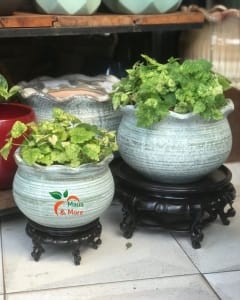
A natural rarity
Tolmiea Menzies is one of the few plants that have fully formed plants on their leaves (they even have rudimentary roots) that separate from the leaves.
The formation of new plants begins, on the adult mother specimen, when growing in a pot, this happens when the roots completely fill the pot, that is, they lengthen so much that they completely braid the inner walls of the container.
New plants, if they are not going to be used for reproduction, must be separated together with the entire leaf or the plants themselves must be stripped. However, it may happen that this list will disappear without your help.
Reproduction
The ability to form new plants on the leaves facilitates vegetative reproduction. You can simply substitute a pot of moist earth under a leaf and place a leaf plate there.
It is very easy to separate rooted young specimens from the leaf. Tolmiea can also reproduce with the help of appendages.
Important notes to keep on your finger-tips



Leave a Reply
Want to join the discussion?Feel free to contribute!